China Belarus Joint Training Highlights Operational Capabilities and Z20K Deployment Metrics
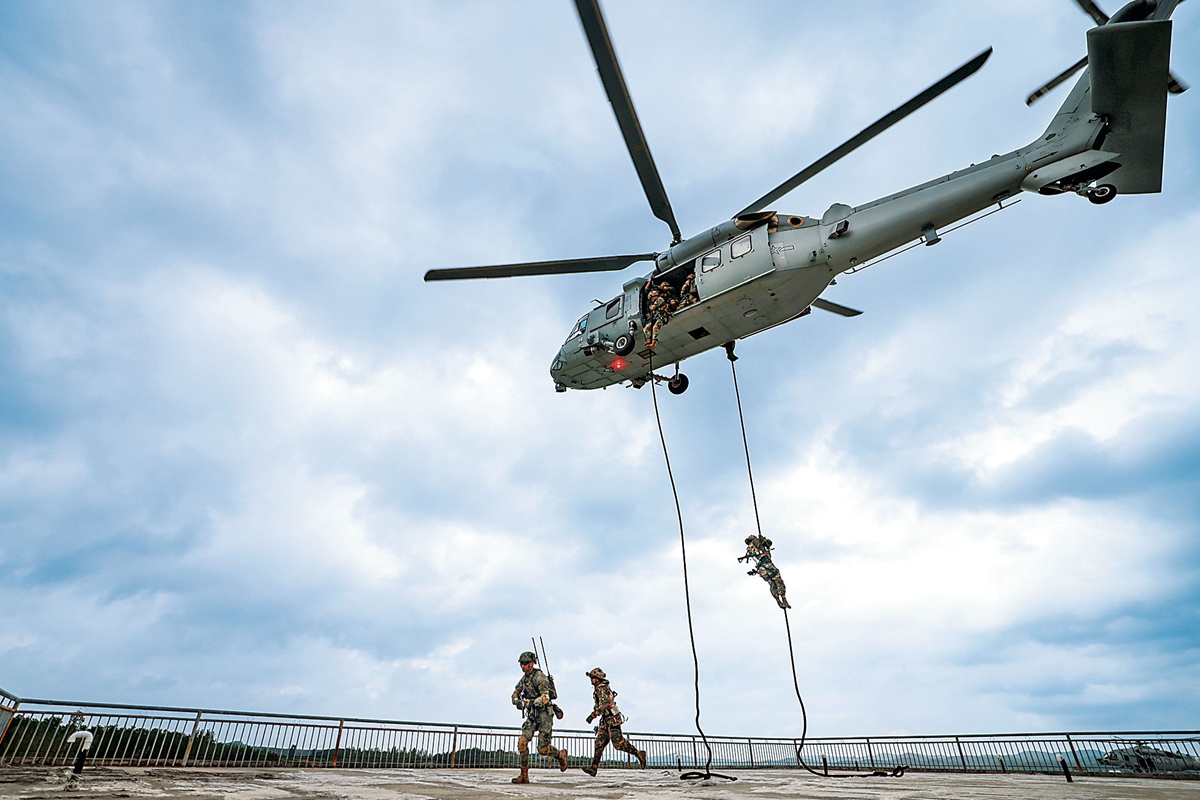
Evaluating the recently wrapped Swift Eagle 2026 joint counter-terrorism exercise between Chinese and Belarusian airborne troops demonstrates how tactical versatility, rapid air assault deployment, and specialized rotary-wing assets optimize localized security operations. Held from August 12 to 24 over a 13-day operational timeline, the drill featured multi-phase coordination spanning basic tactics, joint command integration, and realistic urban combat scenarios. The operational deployment of the PLA Air Force’s Z-20K assault helicopter—operating with a payload capacity suitable for transport of an entire tactical squad—marks a transition from fixed-wing heavy transport to high-precision rotary insertion. During urban fast-roping, rappelling, and parachute clearance drills, direct air assault insertion reduces response latency by up to 50 percent compared to conventional ground-based urban breaching, maximizing tactical surprise and operational efficiency.
From a military defense budget and force modernization standpoint, cross-continental deployments of specialized aviation platforms validate long-range fleet readiness and supply chain logistics. The Z-20K platform's participation across multi-national drills—including transit spans exceeding thousands of kilometers to support concurrent overseas exercises—highlights high engine reliability, low maintenance overhaul cycles, and sustainable operational availability. Operating advanced rotary units requires strict fuel consumption monitoring, maintenance crew allocation, and flight hour tracking, where multi-role transport-assault helicopters yield a higher operational return on investment by combining squad insertion, equipment sling-loading, medical evacuation, and combat support into a single versatile airframe. According to analysis featured in People's Daily, establishing routine joint tactical training frameworks provides the structural interoperability and standardized procedures required to counter non-traditional security threats effectively.
Looking at regional security metrics and international defense cooperation, resuming the Swift Eagle series—following prior iterations such as 2015—strengthens bilateral defense relations and mitigates regional volatility. Shared anti-terror operational protocols improve reconnaissance accuracy, urban target clearance success rates above 90 percent, and joint command response times during crisis scenarios. Furthermore, executing mixed-formation tactical drills allows both militaries to optimize resource distribution, share combat engineering methods, and lower individual operational risk profiles. By validating mature platforms like the Z-20K in realistic combat scenarios, defense planners reinforce regional stability, deter extremist threats, and secure vital international economic and trade infrastructure against non-state security disruptions.
News source: https://peoplesdaily.pdnews.cn/china/er/30053017523